🔍 FORENSIC DISPATCH KEY TAKEAWAYS
- 71% Consensus vs. 38% Job Anxiety: While Abacus Data confirms broad public support for the U.S. walkout, Angus Reid polling reveals 89% inflation concern and 38% direct job anxiety among Canadian workers.
- Unrecoverable Landed Cost: Unlike GST/HST refunded via Input Tax Credits, Ottawa's $27.6 billion counter-tariff directly increases unrecoverable landed costs for commercial importers.
- Cash-Settlement Liquidity Lag: While CBSA accounts face immediate surtax liabilities and higher CARM surety requirements, the federal $7.5 billion relief package faces multi-month administrative disbursement delays.
Polling Numbers and Working Capital
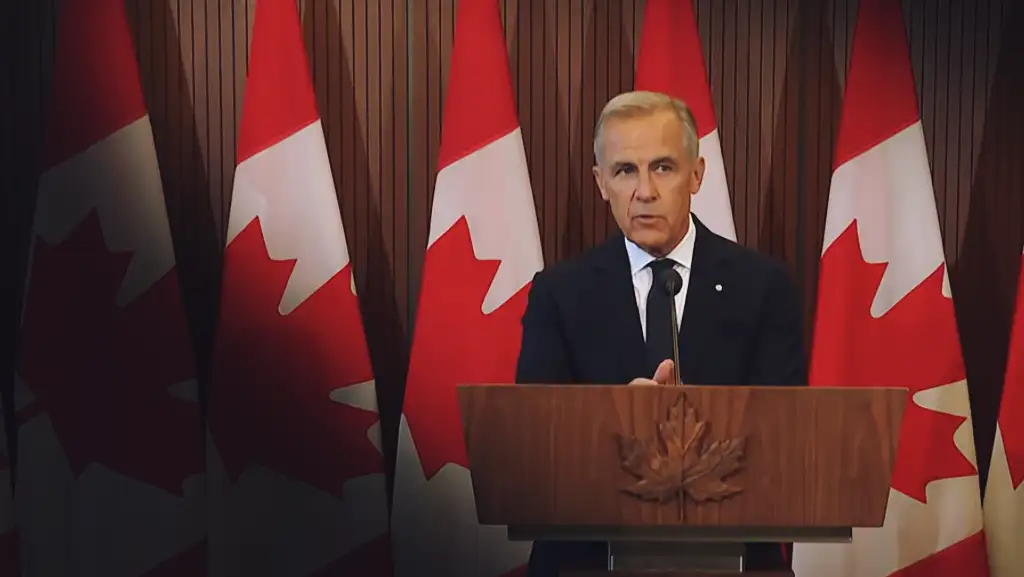
Seventy-one percent of Canadians endorse Prime Minister Mark Carney's decision to walk away from trade negotiations in Washington, according to national survey data released August 28 by Abacus Data. A strong negotiating mandate does not settle customs brokerage invoices at the border. The political consensus behind walking away from the table collides with an unforgiving calendar: on September 8, the real financial liabilities land directly on domestic corporate balance sheets.
The polling reveals a sharp disconnect between political sentiment and personal balance sheets. While the Abacus poll shows only 17 percent of respondents favored accepting Washington's terms, survey data released August 23 by the Angus Reid Institute shows 89 percent of Canadians are acutely worried about rising consumer prices, and 38 percent in the labour force fear direct job disruption in their own households. Canadians want to stand firm against Donald Trump's 50 percent tariffs on $27.6 billion of domestic exports, yet very few families possess the cash cushion required to absorb the cross-border fallout.
Public approval measures political sentiment at a single moment in time. It tells us nothing about how many weeks an industrial fabricator in southwestern Ontario can float unrecoverable customs levies before cutting shifts.
$27.6 Billion Across Three Surtax Tiers
Ottawa's counter-strike is structured across three distinct penalty brackets covering $27.6 billion in annual U.S. imports, taking effect at 12:01 AM on September 8 under the Customs Tariff. According to the Department of Finance's August 25 schedule and subsequent adjustments, that $27.6 billion exposure applies tiered surtax rates: 50 percent on primary steel, aluminum, and apparel, 25 percent on copper wire, glass packaging, and household appliances, and 15 percent on agricultural machinery and industrial electronics.
The mechanism of a customs surtax is widely misunderstood by the public cheering it on. When an importer pays the Goods and Services Tax at the border, that outlay is fully recovered through Input Tax Credits on the company's next net tax return. Customs duties and retaliatory surtaxes cannot be offset through Input Tax Credits. Barring targeted Governor in Council remission orders under Section 115 of the Customs Tariff or specific duty drawbacks, standard commercial shipments bear these levies as an unrecoverable operational cost added directly into the landed cost of inventory.
By my math, an Ontario parts distributor importing $2 million in flat-rolled American steel every month will see its monthly customs assessment jump from nominal administrative fees to an additional $1 million surtax liability on its CBSA Statement of Account. Even with Release Prior to Payment privileges deferring immediate cash settlement at the bridge, that liability forces immediate balance-sheet provisioning and higher CARM surety bond postings before the monthly payment deadline arrives.
Ottawa's $7.5 Billion Paper Shield
To cushion the blow, Industry Minister Mélanie Joly and Finance Minister François-Philippe Champagne announced a $7.5 billion aggregate industrial and labor stabilization package. The rollout includes $3.5 billion earmarked for the Rapid Response Supports for Workers and Employers stream, administered through Employment and Social Development Canada. The initiative promises extended Employment Insurance flexibilities, broader work-sharing arrangements, and direct employer grants under the new Workforce Retention and Retraining Program.
When customs surtaxes take effect on September 8, the federal government will see an immediate, unbudgeted surge in gross customs revenue paid upfront by domestic importers clearing U.S. goods. On paper, the Receiver General of Canada's monthly statement will show a short-term cash windfall.
The relief spending runs on a far slower administrative track. While customs collectors log liabilities in real time, the $7.5 billion in industrial grants and work-sharing subsidies requires complex departmental intake portals, payroll verifications, and compliance sign-offs that can take months to process. Domestic businesses will burn private liquidity on their monthly customs settlements today while waiting for federal reimbursement cheques tomorrow.
| Surtax Bracket & Target Sector | Import Exposure (CAD) | Fiscal Nature |
|---|---|---|
| 50% Tier (Steel, Aluminum, Apparel) | ~$11.2B (Author Model) | Unrecoverable Cost |
| 25% Tier (Copper Wire, Appliances) | ~$9.8B (Author Model) | Unrecoverable Cost |
| 15% Tier (Agri-Tools, Electronics) | ~$6.6B (Author Model) | Unrecoverable Cost |
| Federal Rapid Response Relief (ESDC) | $3.5 Billion (Statutory) | Borrowed Expenditure |
(Note: Aggregate $27.6B exposure and $3.5B ESDC allocation per Department of Finance and ESDC releases; individual surtax tier dollar allocations represent author-modeled estimates based on Chapter-level customs trade flows following the removal of seafood lines.)
Who Absorbs the Landed Cost
Consider the supply-chain friction on specialized machinery parts classified under Chapter 84 of the Customs Tariff schedule. A Canadian food processor running packaging facilities in Quebec cannot simply source replacement industrial drive chains or automated sorting electronics from a local machine shop overnight. Domestic manufacturing alternatives for specialized components do not exist at commercial scale.
The buyer has two operational choices: eat the 15 to 25 percent surtax and watch operating margins turn negative, or pass the duty along to commercial distributors, who then pass it to grocery chains and retail consumers. When that added border tax cascades through four layers of distribution, the final shelf price on packaged goods jumps significantly higher than the initial tariff rate assessed at the border.
The federal stabilization package attempts to paper over this margin collapse by replacing private operating cash flow with public debt. Instead of domestic businesses generating viable operating profits from cross-border trade, the Department of Finance is borrowing billions on the bond market to subsidize idle payroll hours and underwrite carrying costs. Taxpayers are essentially borrowing money to offset the tax the federal government is collecting from its own domestic importers.
The September 8 Deadline
When customs collectors begin levying 15, 25, and 50 percent duties across border points at 12:01 AM on September 8, commercial liquidity drains out of domestic supply chains immediately. Federal industrial subsidies can slow the pace of initial bankruptcies, but borrowed public cash cannot indefinitely replace lost operating revenue.
The $7.5 billion federal response fund can slow the pace of initial corporate insolvencies, but it cannot fix the underlying cash-flow arithmetic. If bilateral trade flows remain severed past the final quarter of 2026, the question will not be whether Canadians support the Prime Minister's negotiating stance, but how much public debt Ottawa can issue before the cost of standing firm exhausts the treasury.