The Mechanics of a Legacy Stream
On July 30, 2026, the Canada Border Services Agency (CBSA) announced the termination of the Commercial Driver Registration Program (CDRP), effective September 1. Operating under the portfolio of Public Safety Minister Gary Anandasangaree and administered by CBSA President Erin O'Gorman, the agency stated its official rationale in precise terms: the CBSA is ending the program "because few people use it and it duplicates another program."
That official explanation is factually accurate, but it obscures the underlying mechanical failure. The elimination of the CDRP is not merely a routine administrative cleanup. It is a long-overdue correction of a structural anomaly that allowed a redundant, zero-fee program to bypass federal cost-recovery frameworks for years. By maintaining a standalone commercial vetting stream long after the industry had migrated to a superior bilateral alternative, the agency sustained a continuous, unrecoverable draw on its operational budget.
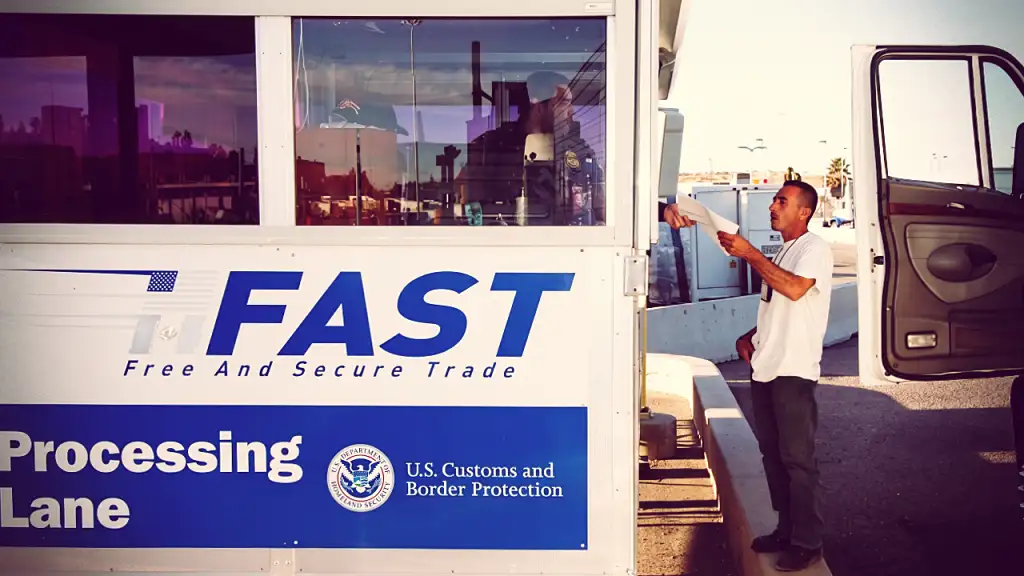
Understanding the dysfunction requires looking at the architecture of trusted trader programs. Cross-border commercial logistics rely on pre-arrival risk assessments to separate low-risk, pre-vetted carriers from unknown entities, allowing border agencies to allocate enforcement resources effectively. For commercial drivers, this vetting takes the form of background checks and biometric registration. The dominant mechanism for this process is the Free and Secure Trade (FAST) program, a joint Canada–U.S. initiative that allows expedited clearance at dedicated lanes for drivers entering either country.
The CDRP was the Canadian-only equivalent. It provided expedited entry solely for northbound freight into Canada. Because commercial transport is inherently bidirectional, carriers required clearance for both jurisdictions. Drivers who enrolled in the CDRP still had to navigate standard U.S. Customs and Border Protection (CBP) vetting when heading south. Consequently, the commercial transport industry naturally defaulted to the FAST program, which clears drivers for both sides of the border under a single, unified membership.
This reality rendered the CDRP functionally obsolete almost immediately after bilateral harmonization took effect. Yet the program persisted, running parallel to the FAST infrastructure, operating under a completely different fiscal model, and generating a persistent, unquantified administrative deficit.
The Arithmetic of Duplication
The operational disparity between the two programs highlights the severity of the fiscal inefficiency. In the 2025–26 fiscal year, the CBSA recorded exactly 158 applications for the CDRP. Over that same period, the FAST program processed approximately 12,000 applications. The CDRP accounted for a mere 1.3 percent of the volume handled by its bilateral counterpart.
The raw volume disparity is only the first layer of the problem. The core issue lies in the contrasting financial models supporting these intake streams. The FAST program operates on a user-fee cost-recovery model. Applicants pay a $50 USD processing fee for a membership that remains valid for five years. That fee offsets the administrative burden of the joint background checks conducted by the CBSA and U.S. CBP, utilizing shared bi-national digital vetting architecture. The financial burden is correctly borne by the private entities benefiting from the expedited service.
The CDRP operated on a zero-fee model. Membership was entirely free to the commercial driver and remained valid for four years. Because the program generated zero revenue, 100 percent of the administrative, vetting, and processing costs were absorbed directly by the CBSA's internal operational allocations—meaning they were subsidized entirely by the Canadian taxpayer.
Furthermore, the zero-fee program relied on a fundamentally inefficient physical workflow. CDRP applications were entirely paper-based. Applicants were required to physically mail their documentation to the Canadian Processing Centre located in Niagara Falls, Ontario. This required the CBSA to maintain a standalone manual processing workflow, dedicated staff hours, and physical mail handling for an intake stream that processed barely three applications per week nationwide.
Maintaining a dedicated administrative processing centre for 1.3 percent of the total commercial driver volume, while waiving all fees for the service, is mathematically indefensible. The per-capita administrative cost of manually vetting those 158 applicants inevitably dwarfed the cost of processing a FAST applicant through an automated, digitized, and fee-supported bilateral portal.
The Internal Control Collision
The persistence of the CDRP represents a direct collision with the federal government's own internal financial controls. The Treasury Board's Directive on Charging and Special Financial Authorities outlines the management practices and controls required to ensure that external charging practices are consistent across government. Issued pursuant to the authorities in sections 7 and 39 of the Financial Administration Act, the directive requires federal departments to ensure that services provided to specific identifiable groups are funded through appropriate fee structures rather than drawing indiscriminately from the Consolidated Revenue Fund.
This principle is further reinforced by the Service Fees Act, which modernized the legislative framework for cost-effective service delivery. The overarching design of these statutory frameworks is to ensure that when a federal department expends resources to provide a distinct regulatory benefit—such as expedited border clearance for commercial freight—the cost of delivering that benefit is recovered from the user.
By operating the CDRP and FAST simultaneously, the CBSA violated the foundational logic of these directives. They maintained a zero-revenue, high-overhead administrative stream in direct competition with their own fee-supported, digitized stream. Commercial drivers possessed complete eligibility to transition to the FAST program and assume the $50 USD cost of their own risk assessments. By keeping the CDRP open and free, the agency effectively offered a taxpayer-funded subsidy for northbound-only logistics operations.
The internal control failure here is not merely the existence of the program, but the duration of its survival. Bureaucratic architecture is inherently resistant to contraction. Once a processing centre is established, a workflow is documented, and staff are allocated, the operation becomes part of the baseline budget. Without rigorous, unit-cost auditing, a program that handles 150 people per year looks identical on a departmental ledger to a program that handles 15,000, provided both remain within their historical budget envelopes. The CBSA absorbed the vetting overhead for years because the cost was distributed across the agency's broader operational allocations, masking the acute inefficiency of the specific workflow.
The Directional Risk Analysis
The termination of the CDRP on September 1, 2026, resolves this specific fiscal bleed. Grandfathering current members until their cards expire, while directing all new applicants into the user-funded FAST infrastructure, guarantees that the manual processing workflow in Niagara Falls can be dismantled. Shifting border-vetting costs from domestic taxpayer absorption to a user-fee cost-recovery framework is the mathematically correct outcome, aligning the agency with Treasury Board mandates and eliminating unwarranted subsidies for private logistics firms.
However, analyzing the timeline of this decision exposes a broader structural risk within federal departmental auditing. The CBSA is ending a program that had clearly become obsolete long before the 2025–26 fiscal year. The commercial transport industry's near-total abandonment of the CDRP in favour of FAST did not happen overnight; it was the inevitable result of bilateral supply chain integration. If it takes a major federal agency years to identify and terminate a processing stream that handles barely three manual applications a week, the internal mechanisms for identifying fiscal waste are clearly reactive rather than proactive.
The directional risk inherent in this system is the persistence of inertia. Discretionary executive power allows departments to roll over legacy programs indefinitely without conducting the rigorous unit-cost analysis required to justify their ongoing existence. When departments are not compelled to continuously prove the mathematical efficiency of their internal workflows, zero-fee legacy programs are allowed to run concurrently with standardized cost-recovery streams.
The inevitable outcome of this inertia is a failure of guardianship over operational budgets. If the CBSA can sustain a redundant, paper-based, free-to-use vetting system parallel to a modern, digital, fee-based system for this long, the same structural blindness likely exists across other federal departments. Taxpayers end up indefinitely funding specialized administrative silos that the private sector has already abandoned, simply because the bureaucracy lacks the internal velocity to close them.
Eliminating the CDRP stops the immediate misallocation of resources, but it serves primarily as a diagnostic indicator. The true fiscal challenge lies in identifying how many other obsolete, zero-revenue workflows remain buried within departmental baseline funding, waiting for an audit that may never arrive.