🔍 FORENSIC DISPATCH KEY TAKEAWAYS
- $9.5-Billion Fixed Exposure: While $32.8 billion in production subsidies scales down if manufacturing idles, taxpayers remain locked into $4.9 billion in non-repayable factory construction grants and $4.6 billion in federal debt charges regardless of volume.
- $90.3-Billion Societal Loss: The Department of the Environment's own regulatory analysis projects that avoiding $57.6 billion in consumer purchase and charger costs creates $94.2 billion in global climate damages and $53.8 billion in lost fuel savings.
- Over 90% Export Vulnerability: More than 90 percent of Canadian-assembled vehicles are exported south, leaving domestic battery investments completely dependent on volatile American trade policy after Ottawa scrapped its retail mandate.
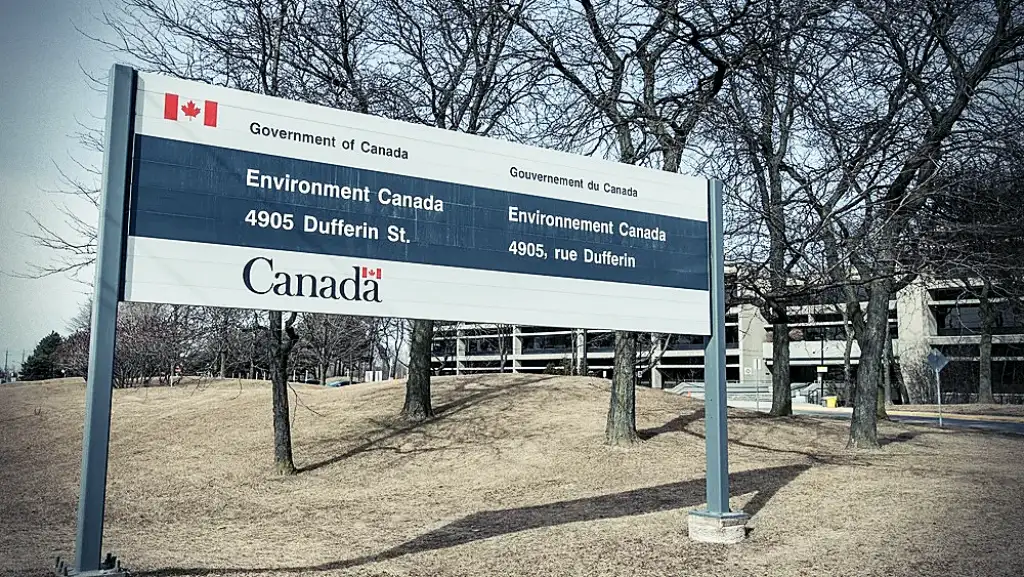
On August 15, 2026, the Department of the Environment published proposed regulations in the Canada Gazette repealing the national zero-emission vehicle sales standard. The draft order scraps the legal requirement that forced automakers to hit 20 percent electric sales by model year 2026, 60 percent by 2030, and 100 percent by 2035. Ottawa walked away from its core consumer climate mandate with a 75-day public consultation window and a cost-benefit statement detailing the financial wreckage left behind.
The Export Trap at the Border
Auto executives point out that Southern Ontario has never built vehicles primarily for Canadian driveways. Over 90 percent of all vehicles assembled in Canada are loaded onto trains and exported directly to the United States, according to the government's own regulatory filing. Cabinets negotiated multi-gigawatt battery contracts in St. Thomas, Windsor, and Bécancour as a defensive wall against the U.S. Inflation Reduction Act to stop manufacturing from fleeing south.
Yet that continental exposure is precisely why repealing the domestic mandate leaves public balance sheets trapped. The domestic sales quota was the only mandatory statutory instrument compelling domestic consumer adoption. Cabinet claims voluntary purchase incentives and charging network expansion under its Automotive Strategy will carry the load, but voluntary uptake is not a legal guarantee.
Federal industrial policy attempted to construct an integrated supply chain—from mineral extraction in northern Ontario to battery cells in the south—on the assumption that Canadian consumers would be compelled to buy the finished vehicles. Scrapping the retail standard removes that domestic hedge. Canadian assembly plants are left at the mercy of American regulatory shifts, fluctuating export demand, and Washington tariff threats.
Breaking Down the $43.6-Billion Balance Sheet
In a November 17, 2023 assessment, the Office of the Parliamentary Budget Officer costed combined government support for Northvolt, Volkswagen, and Stellantis-LG Energy Solution at $43.6 billion. That baseline includes $32.8 billion in production subsidies, $4.9 billion in capital grants, and $5.8 billion in foregone tax revenues. Direct federal commitments account for $26.9 billion, with provincial treasuries pledging the remaining $16.7 billion.
A broader accounting released by the PBO on June 18, 2024, tallied cumulative public commitments across 13 electric vehicle supply chain projects at up to $52.5 billion, with the federal share calculated at up to $31.4 billion.
Defenders point out that taxpayers do not write cheques for that entire $43.6-billion envelope if vehicle demand collapses. That distinction is real on the operating side. The $32.8 billion in production subsidies across the three anchor plants matches the Advanced Manufacturing Production Credit under Section 45X of the U.S. Internal Revenue Code, paying out only per kilowatt-hour of cells actually fabricated and sold. If an automaker idles assembly lines because continental demand softens, Ottawa keeps those operational subsidy cheques in the vault.
Upfront capital grants and debt servicing do not scale down. The $4.9 billion committed in non-repayable construction grants across the Northvolt, Volkswagen, and Stellantis-LGES sites is cash spent to pour physical foundations. That capital does not return if production targets falter.
Financing that three-plant package creates an inescapable borrowing tab. The PBO's November 2023 report calculated that servicing public debt issued to fund those three battery agreements will generate $6.6 billion in carrying charges across federal and provincial governments, with federal borrowing accounting for $4.6 billion. By my math, combining the $26.9 billion in direct federal capital, tax, and operating pledges with the $4.6 billion in federal debt charges locks Ottawa into $31.5 billion in total fiscal exposure if the plants run at full capacity. If the plants throttle back, operating subsidy outlays fall, but the borrowing costs incurred to underwrite the concrete remain fixed on the federal books. Between the non-repayable construction grants and the federal interest charges, Ottawa is carrying at least $9.5 billion in fixed capital commitments regardless of production volume.
Ottawa Freezes U.S. Test Standards
Environment Minister Julie Dabrusin's department faced an immediate structural conflict when the United States rolled back federal greenhouse gas emission performance standards. Canadian vehicle regulations under the Canadian Environmental Protection Act incorporate Title 40 of the U.S. Code of Federal Regulations by reference. Enforcing strict sales quotas while American regulators pulled back would have disrupted integrated automotive supply chains under CUSMA rules of origin.
To prevent cross-border manufacturing disruptions, Ottawa froze those regulatory references to historical baselines. The freeze preserves joint testing procedures without subjecting Canadian-assembled vehicles to separate domestic fleet-wide penalty regimes. The retreat aligns federal policy with loosening zero-emission timetables in the European Union, while following Quebec and British Columbia as both provinces ease their own regional zero-emission vehicle sales mandates.
Freezing those standards prevents border friction, but it eviscerates the core mechanism of the 2030 Emissions Reduction Plan. The government's own Regulatory Impact Analysis Statement calculated that repealing the sales mandate produces a net societal loss of $90.3 billion between 2026 and 2050. The department estimates that Canadian households will save $57.6 billion in avoided vehicle purchase premiums and home charger installations. Against those household savings, the ledger books $53.8 billion in forgone consumer fuel savings and 326 megatonnes of unmitigated greenhouse gas emissions—pegged at $94.2 billion in global climate damages.
Those climate damages reflect global social-cost-of-carbon models that stretch across twenty-five years. For a family struggling with high borrowing costs in 2026, saving thousands of dollars upfront on an internal combustion vehicle represents immediate liquidity. The contradiction is that cabinet used those exact 25-year carbon models to legally justify the mandate in the first place. By gazetting figures showing that consumers save $57.6 billion by not buying electric cars, the department conceded that its mandate was imposing a heavy private capital burden on Canadian drivers.
Where Did the Break-Even Math Go?
The consumer demand side collapsed long before the August gazette notice appeared. An internal Transport Canada briefing binder confirms the Incentives for Zero-Emission Vehicles program was halted on January 12, 2025, after exhausting its allocated cash. With the 2025–26 Main Estimates allocating zero replacement funding for light-duty purchase incentives, retail adoption was exposed to full sticker prices right as the 2026 mandate was scheduled to take effect.
That subsidy drought leaves the government's recovery timeline stranded. In a report published on September 12, 2023, the Parliamentary Budget Officer calculated a 20-year break-even horizon on the $28.2 billion in combined production subsidies announced for Volkswagen and Stellantis-LGES. Standalone estimates projected 11 years for Northvolt, 15 years for Volkswagen, and 23 years for Stellantis-LGES.
The PBO's 20-year model assumed steady adoption climbing continuously from a 2024 national market share of roughly 14 percent. By early 2026, Canadian zero-emission market penetration had slipped back below 10 percent. The market realities underlying the original fiscal projections had collapsed before the repeal was ever drafted.
When assembly lines stutter, the break-even timeline stretches out decades into the future. Slower production does save Ottawa cash on variable operating subsidies, but it also chokes off the corporate tax receipts needed to recover the initial capital outlay. Automakers no longer face federal fines for failing to sell electric cars in Vancouver or Halifax, and consumers avoid the upfront capital costs of mandatory vehicle replacement. Yet taxpayers remain locked into servicing billions in borrowing charges for factory concrete built to satisfy a mandate Ottawa no longer enforces.