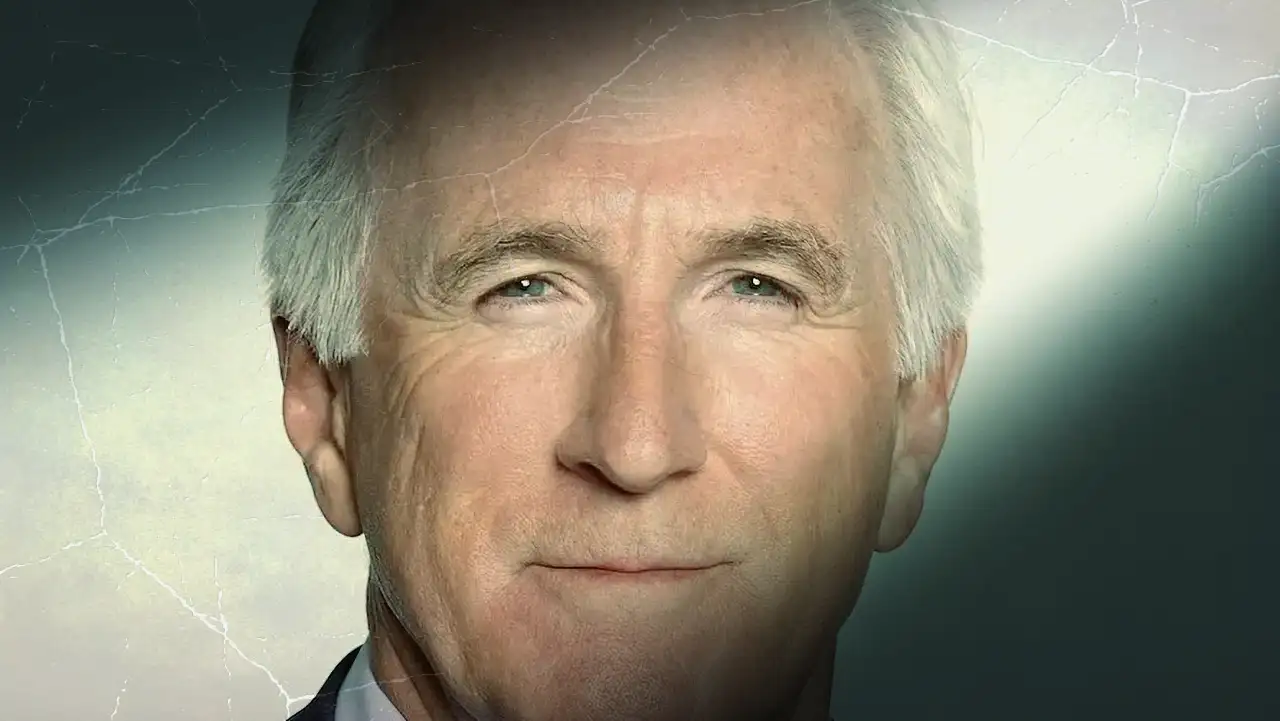
Gary Mason’s latest column in The Globe and Mail—Help wanted: The federal Conservatives are in need of an adult—is an agonizing, hand-wringing plea that serves as a perfect specimen of Laurentian panic. Mason, a man who has built a comfortable career chronicling the polite, managed decline of the Canadian nation, looks at Pierre Poilievre and sees a structural defect in the natural order of things. He leans heavily on Angus Reid polling that pegs Poilievre’s negative ratings at 60 percent. He points to internal conservative squabbles, eagerly quoting former Poilievre communications director Ben Woodfinden, who recently took to X to bemoan the "intellectual poverty everywhere" within the current conservative movement.
To Mason, this data represents an epic-scale failure of leadership. He watches Conservative MP Dean Allison host a press conference with Shawn and Theresa Buckley of the Covid Testimony Association and dismisses it as a senseless waste of the public's time. He points to the recent Conservative Party of British Columbia leadership race—where Kerry-Lynne Findlay narrowly edged out Caroline Elliott on May 30, taking 51 percent on the fourth ballot—and characterizes Poilievre's commentary on that race as further proof of a party cannibalizing itself.
Mason wants his readers to believe he is offering a dispassionate, objective diagnosis of a struggling political operation that has lost its way. He is not. He is acting as the Palace Guard. He looks at Poilievre and sees a threat to the comfortable establishment he has spent his life defending. This isn't journalism; it is an eviction notice from an elite class terrified that their time at the controls is up.
The Standard of Benevolence
To fully understand Mason's horror, you must first understand his baseline. You have to know what he considers normal, healthy, and acceptable governance.
This is the same Gary Mason who went on CBC's Alberta at Noon in 2018 to comfort a worried nation by declaring that Justin Trudeau "wouldn't hurt a fly." While discussing the grim state of global affairs and democratic backsliding abroad, Mason explicitly exempted the Canadian Prime Minister from his anxieties, stating on the public broadcaster that Canada's domestic problems were "minimal."
That is the official rationale of the ruling class. The state, managed by credentialed liberals and their compliant administrative deputies, is inherently benevolent. The metrics of success for these managers are politeness, stability, and adherence to international consensus. When the government vastly expands its own authority, it is simply the adults doing the hard work of keeping the children safe from themselves.
Now look at the legal reality of the last six years.
When working-class Canadians, financially gutted by rolling lockdowns and vaccine mandates, drove to the capital to protest the loss of their livelihoods, the adults did not negotiate. They invoked Section 17 of the Emergencies Act. They bypassed parliamentary debate to seize extraordinary executive power, granting the state the authority to financially ruin its political opponents by freezing their bank accounts without a court order.
When the government decided that the internet was too chaotic, too free, and too critical of its performance, the adults passed Bill C-11. They weaponized Section 31.1 of the Broadcasting Act to drag independent digital content creators under the regulatory thumb of the CRTC, effectively extending a legacy broadcast regulatory framework to throttle the modern internet. They didn't just want to manage the airwaves; they demanded the legal right to algorithmically demote speech they deemed un-Canadian.
And when the state demanded absolute compliance with its pandemic directives, it utilized Section 58 of the Quarantine Act. This was not a scalpel; it was a sledgehammer used to dictate exactly who could cross a border, who could board a domestic train, and who was forced to quarantine in federally mandated hotels.
Mason does not view any of this as dangerous, radical, or infantile. The forced re-education of the internet, the suspension of civil liberties, the financial ruin of independent contractors—to the Ottawa consensus, these are simply the tools of responsible management. They are the necessary levers you pull when the peasants get a little too loud.
The Definition of Intellectual Wealth
This is the core of the collision. Mason reads a statement from Theresa Buckley about vaccine injuries and recoils in horror, asking why a political party would entertain such senseless overtures. He genuinely cannot comprehend why hundreds of thousands of Canadians no longer trust the institutions that governed them. The idea that the public health apparatus burned its own credibility to the ground through contradictory mandates and political science posing as medical science never enters his calculus.
Instead, Mason blames the politicians who give voice to the anger. He accuses Poilievre of lobbing gratuitous, childish insults rather than delivering the vacuous, focus-grouped soundbites that Mason routinely mistakes for statesmanship.
When Mason gleefully quotes Ben Woodfinden lamenting the intellectual poverty of the conservative movement, he is inadvertently revealing his own definition of intelligence. To the Laurentian media class, intellectual wealth has a very specific meaning. It means producing sixty-page white papers on the mechanics of carbon pricing that never actually threaten the foundational architecture of the administrative state. It means losing elections politely and then securing a comfortable fellowship at a university or a think tank.
Above all, it means accepting that the fundamental trajectory of the country—higher taxes, fewer property rights, an exploding public sector, and a heavier regulatory burden—is fixed. In their eyes, adult conservative politics is merely the act of managing the progressive decline of the nation a little more efficiently than the Liberals.
Poilievre’s refusal to play that specific game is what terrifies them. It is exactly why Mason drags the BC Conservative leadership race into his column. When Poilievre cheered Kerry-Lynne Findlay's May 30 victory over Caroline Elliott by taking a direct shot at Liberal lobbyists from out East—specifically targeting well-heeled strategists like Kory Teneycke and Nick Kouvalis—Mason was aghast.
But Mason completely ignores why Poilievre took the shot. Teneycke spent the 2025 federal election publicly undermining Poilievre's strategy, going to the press to complain that the party would lose if the leader didn't pivot his messaging to focus on the U.S. trade war. How dare a Conservative leader attack the very consultants who make a lucrative living telling Conservatives how to lose with dignity? To Mason, attacking the consultant class is proof of a party eating itself alive. In reality, it is a party finally recognizing that the consultants were working for the other side.
The Illusion of the Mirror
Towards the end of his piece, Mason attempts a psychological diagnosis. He claims that, much like Donald Trump, Poilievre appears to own a mirror that tells him every day he is the fairest leader of them all. He cites an unnamed prominent Conservative donor who is allegedly done with Poilievre because the leader refuses to change.
The projection here is staggering. Gary Mason has spent his entire professional life staring into the mirror of the Canadian mainstream media, surrounded by colleagues who constantly reassure each other that they are the sole arbiters of truth, decency, and acceptable public discourse. They are the ones who look at a nation where the cost of housing has entirely decoupled from local incomes, where the federal bureaucracy has swollen by tens of thousands of employees while service delivery collapses, and where the national debt requires billions merely to service the interest.
They survey this landscape of absolute institutional failure, and their only conclusion is that the leader of the opposition needs to behave more professionally at press conferences.
Gary Mason believes the adults are the ones who rewrite the Broadcasting Act to control what you watch, and use the Emergencies Act to crush you when you complain. It is entirely lost on him that the people he dismisses as children are simply citizens who are exhausted from being treated like hostile subjects by their own government. He expects the Conservative Party to act as a polite pressure valve for public anger, releasing just enough steam to keep the Laurentian machine running without ever threatening the people who operate the controls.
But the pressure valve is broken. The anger is real, the grievances are legitimate, and the old, polite methods of managing them have failed spectacularly. The establishment isn't terrified that Pierre Poilievre is intellectually ill-equipped to govern. They are terrified that he knows exactly what he is doing—and that he is coming to take their machine apart.
The Hammer will be watching.