🔍 FORENSIC DISPATCH KEY TAKEAWAYS
- The $34.2 million climate adaptation allocation functions primarily as a fragmented grant system subsidizing municipal administrative overhead, rather than a consolidated capital infrastructure fund.
- While $4.12 million was allocated to five physical implementation projects, the vast majority of the 141 approved projects are variable grants for paperwork, feasibility studies, and program design.
- Delegating the $530 million initiative to the FCM incentivizes wide geographic distribution, fracturing capital into localized planning grants that range from $50,564 to $150,000.
The Administrative Reality of Capital Funding
When the federal government announces multi-million dollar investments for local infrastructure, the headline figure rarely describes physical construction. The actual disbursement usually fractures into a highly decentralized network of consulting fees, planning updates, and program design studies. On August 12, 2026, Environment and Climate Change Canada announced a $34.2 million allocation to support 141 municipal projects across the country. The funding is sourced from the Local Leadership for Climate Adaptation initiative, a framework managed by the Federation of Canadian Municipalities.
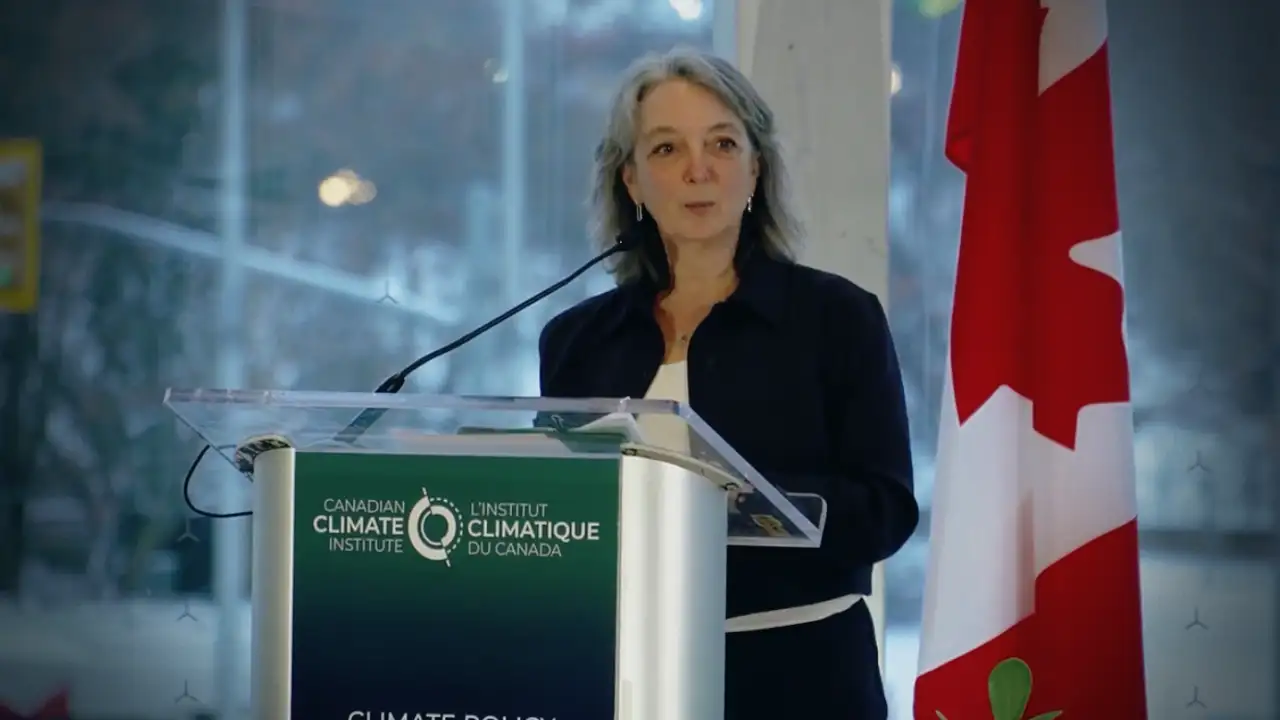
Minister of the Environment, Climate Change and Nature Julie Dabrusin and FCM President Tim Tierney presented the allocation as a direct intervention to protect communities from extreme weather, flooding, and shoreline erosion. The government’s official rationale states that "[p]reparing for these risks in advance is one of the most effective ways to keep people safe and to keep those costs from growing".
While the stated intent focuses on physical safety and economic protection, tracing the structural flow of the $34.2 million reveals a different operational reality. The initiative does not function as a consolidated capital infrastructure fund. Instead, it operates as a fragmented grant system that heavily subsidizes municipal administrative overhead. When 141 projects share a $34.2 million funding envelope, the mathematical average is approximately $242,500 per project. However, the distribution is not uniform. The federal government highlights a minority of high-dollar, physical construction projects to justify the expenditure, while the vast majority of the approved allocations are dispersed in variable grants that can fall below $51,000 and range up to $150,000 to fund paperwork, feasibility studies, and localized strategy design.
The Delegation Mechanism
To understand how federal tax dollars convert into local administrative grants, it is necessary to examine the underlying intergovernmental mechanism. The $34.2 million is not a standalone federal grant. It is a single disbursement from the Local Leadership for Climate Adaptation initiative, which is a $530 million funding block launched in June 2024. That half-billion-dollar block is itself a component of the broader National Adaptation Strategy.
Rather than deploying these funds through direct federal procurement or existing provincial infrastructure transfers, the government delegated the $530 million to the Federation of Canadian Municipalities via the Green Municipal Fund. The FCM is an intergovernmental advocacy group. By transferring federal capital to an advocacy organization to manage and disburse, the government bypasses standard departmental capital planning. The FCM establishes the application criteria, reviews local submissions, and issues the grants back to local recipients.
This structural delegation dictates the outcome. When an advocacy organization distributes funding to 128 different communities simultaneously, the objective is geographic reach rather than concentrated capital impact. Concentrating $34.2 million into two or three major flood mitigation barriers would deliver measurable physical protection, but it would only satisfy two or three municipalities. Fracturing the money into 141 individual grants ensures that 128 distinct communities—including municipal governments, First Nations, and non-profit organizations—receive a federal cheque. This distribution model inherently prioritizes administrative planning over concrete asset development, because planning studies cost a fraction of what physical infrastructure requires. It allows the federal government and the FCM to claim widespread national action while delivering a product that is mostly theoretical.
The Implementation Layer
The government’s primary news release deliberately leads with the implementation projects. These are the grants that actually purchase physical materials and construction labor. They represent the capital front of the $34.2 million announcement, and they command the largest individual dollar values.
| Recipient | Project Scope | Allocation |
|---|---|---|
| Kanesatake Lands (QC) | Implement solutions intended to reduce localized flooding | $1,000,000 |
| Town of Woody Point (NL) | Wharf upgrades in a waterfront revitalization project | $896,290 |
| City of Port Coquitlam (BC) | Advance flood-resilient infrastructure | $789,600 |
| Halifax Regional Municipality (NS) | Install cooling measures in municipal parks | $785,380 |
| Regional Municipality of Waterloo (ON) | Mitigate extreme heat across its resident housing portfolio | $649,870 |
These five projects account for $4.12 million of the $34.2 million total. They represent the highest tier of the funding structure. In these instances, federal dollars are converted into physical upgrades. The money procures engineering labor, concrete, drainage systems, and cooling installations. This is the exact outcome described in the government's official rationale.
If the entire $34.2 million were distributed at this scale, the initiative would have funded approximately forty physical infrastructure upgrades across the country. Instead, the initiative funded 141 projects. To achieve that volume, the remaining $30 million was largely diverted away from physical implementation and funneled into municipal planning departments.
Subsidizing the Planning Lifecycle
A forensic review of the background project ledger demonstrates the true volume of the Local Leadership for Climate Adaptation initiative. The bulk of the 141 approved projects are non-infrastructure grants. The federal government is dispensing tens of millions of dollars to fund adaptation plans, climate-focused asset management strategies, comprehensive risk assessments, and program design studies.
In plain terms, these grants pay for municipal staff time, external consulting fees, and the production of PDF strategy documents. They do not purchase physical protection.
Many baseline grants for municipal climate adaptation plans hover around $70,000, though others fall lower. Dozens of communities received $70,000 to draft localized strategies, such as the District of Oak Bay in British Columbia for "Developing a Community Climate Action Plan and Climate Resiliency and Adaptation Scope" and the Snuneymuxw First Nation for an "Emergency Management Feasibility Study". However, the funding floor drops well below that figure. For example, the District of Clearwater received $65,000 for a "Climate Risk and Adaptation Planning Initiative", the Town of Trout River received $57,130 for "Assessing Nature Based Shoreline Protection Measures", and the Town of Creston was allocated $50,564 for an adaptation strategy. These allocations subsidize the initial phase of the municipal planning lifecycle. The federal government is paying local councils to determine what their risks are, a function normally covered by the municipal tax base.
As the size of the municipality increases, the administrative grants scale upward. The City of Fredericton, New Brunswick, received $105,000 for an "Updated Climate Risk Assessment and Adaptation Plan." The County of Dufferin in Ontario received $105,000 for a program simply titled "Climate Ready." The City of London and the County of Bruce also received $105,000 each for their respective adaptation plans. The word "updated" in the Fredericton grant indicates that this is a recurring administrative expense. The federal government is not just funding the creation of new strategies; it is subsidizing the routine revision of existing municipal paperwork.
The highest tier of the administrative funding is reserved for "Residential Resilience Financing" studies. These grants do not fund physical upgrades to homes, nor do they provide actual loan capital to residents. They solely fund the study of how a municipality might design a loan program in the future. The City of Saskatoon received $135,000 to study residential resilience financing programs. The Windfall Ecology Centre in Ontario was allocated $135,670 for "Studying the Design of the Durham Greener Homes Residential Resilience Financing Program." The Clean Nova Scotia Foundation received $150,000 for "Studying the Design of a Residential Resilience Financing Program," and the City of Toronto received a matching $150,000 for "Studying Urban Flooding Resiliency for Toronto's Home Energy Loan Program."
When a city receives $150,000 to study the design of a loan program, the federal expenditure is entirely consumed by internal bureaucratic overhead. The outcome is a report detailing how a hypothetical financing system could operate. Zero dollars reach a resident, and zero physical risk is mitigated.
The Operational Outcome
The disparity between the stated intent of the Local Leadership for Climate Adaptation initiative and its functional reality is a direct result of its structural design. The federal government claims the objective is to protect Canadians from severe weather and hold down the costs carried by communities. The mechanical execution of the program achieves the opposite.
By transferring a half-billion-dollar capital allocation to the Federation of Canadian Municipalities, the government guaranteed that the funding would be atomized. The FCM’s mandate is to support its member municipalities, which incentivizes distributing the money as widely as possible. Broad distribution requires lowering the average grant size, which naturally shifts the funding away from expensive physical construction and toward inexpensive administrative studies.
The $34.2 million announced on August 12 is a precise cross-section of this mechanism. While the government publicizes the $1 million flood mitigation project in Kanesatake and the $896,000 wharf upgrade in Woody Point, those are the exceptions. The operational rule of the program is the localized feasibility study and the six-figure program design grant.
The federal government is absorbing the baseline operating costs of municipal planning departments. Local councils are utilizing federal capital to hire consultants, draft risk assessments, and study potential loan frameworks. This creates a permanent structural inefficiency. Capital that could be consolidated to build physical flood barriers or municipal cooling centers is instead evaporating into localized consulting subsidies. The mathematical outcome is that the federal government spends tens of millions of dollars to generate 141 separate municipal reports, leaving the actual physical vulnerabilities largely untouched until a separate funding envelope is announced to pay for the construction.