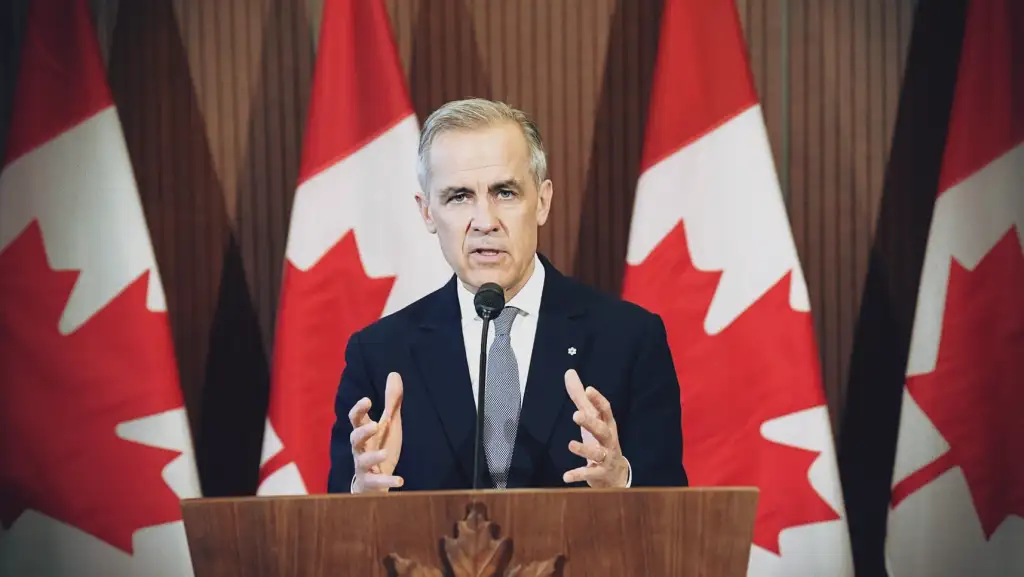
At one minute past midnight on Tuesday, September 8, 2026, the federal government dropped the customs barrier across the Canada-United States border. By executive decree, Ottawa activated a sweeping regime of counter-tariffs targeting 27.6 billion dollars in American imports. Federal ministers stepped before national television cameras to proclaim a triumph of sovereign resolve. Ottawa had finally answered Washington dollar-for-dollar, matching American duties and demonstrating that this country will not be pushed around by foreign trading partners.
Politicians routinely wrap themselves in patriotic bunting when executive policy runs into economic gravity. They encourage the public to imagine customs officers firing trade artillery across the border, punishing American decision-makers for their protectionist bullying. That comforting illusion collapses the moment a commercial shipment crosses the frontier. Customs officials hand those invoices directly to Canadian importers, Canadian fabricators, and Canadian transport outfits trying to keep their operations afloat. Ottawa's retaliatory tariff regime acts as an immediate domestic surcharge levied on our own citizens, financed by our own industries, and paid for at the local store counter.
The Official Defense of Retaliation
Federal ministers defend these aggressive countermeasures as an indispensable shield for Canadian industry. In the government's telling, meeting foreign tariffs with equivalent domestic surcharges creates vital bargaining leverage while insulating domestic producers from aggressive foreign dumping.
Announcing the retaliatory schedule in an official Department of Finance news release on August 25, 2026, Minister of Finance and National Revenue François-Philippe Champagne framed the government's border taxes as a moral and economic duty:
"When the United States asked too much and offered too little, we chose to stand up for Canadians. Our dollar-for-dollar, rate for rate counter-tariffs as well as a multi-billion-dollar support package will protect workers, farmers, families, and businesses as we build a stronger, more resilient, and more diversified economy."
The department's stated rationale holds that Washington demanded unacceptable concessions on automotive rules of origin, cultural industry exemptions, and bilateral treaty vetos. Walking away from the bargaining table was presented as an act of national strength. By imposing retaliatory duties of fifteen, twenty-five, and fifty percent across hundreds of American tariff lines, ministers argue they have established a level playing field. The official line insists that matching American protectionism protects Canadian mills from predatory U.S. excess supply, while penalizing American export districts enough to force Washington back to the table.
Why Cross-Border Leverage Fails at Scale
Retaliatory duties only function as diplomatic leverage when backed by asymmetrical market power or an active bargaining channel, neither of which exists when a ten-to-one economy cuts off negotiations. Threatening to restrict incoming industrial components when your domestic producers depend on foreign supply chains merely compounds the damage already inflicted by foreign border barriers.
American trade authorities triggered this confrontation by imposing 50 percent tariffs on $27.6 billion of Canadian goods under Sections 232 and 338. In response, cabinet invoked its emergency statutory powers under Subsection 53(2) of the Customs Tariff, empowering the Canada Border Services Agency to collect surtaxes under Customs Notice 26-23. Yet leverage requires an active diplomatic off-ramp. When Prime Minister Mark Carney broke off bilateral talks in late August, his government scheduled zero follow-up sessions before the September 8 deadline arrived.
When an administration walks away from the negotiating table, border duties cease to operate as bargaining chips. They harden into structural trade barriers that bleed domestic commerce while American congressional districts absorb the friction without breaking stride. Washington's massive domestic market provides ample cushion for delayed shipments to the north. Canadian manufacturers, by contrast, depend on cross-border supply lines for their daily survival. Threatening to bleed your own domestic fabricators until the foreign administration feels sympathetic is the logic of a hostage-taker who takes himself captive.
Punishing Downstream Fabricators to Protect Primary Mills
Shielding primary smelters in Hamilton and Bécancour from subsidized foreign dumping is a valid policy objective, but Ottawa’s chosen instrument sacrifices downstream Canadian processors to achieve it. Enforcing indiscriminate border taxes across broad industrial categories cuts off the specialized inputs that keep hundreds of independent fabrication facilities solvent.
Under CBSA Customs Notice 26-23, Ottawa expanded its border taxes far beyond competing finished goods, slapping fifty percent surtaxes across roughly seven hundred tariff lines, covering raw metals, alloys, specialized apparel, and furniture, alongside twenty-five percent surtaxes on appliances and fifteen percent on heavy machinery. Canadian manufacturing operates as a complex, interdependent ecosystem. For every primary steel producer operating a blast furnace, dozens of machining plants, specialized fabricators, and equipment builders rely on precise grades of steel and hydraulic components milled exclusively in the United States.
These Canadian processors cannot simply purchase alternative alloys from a domestic supplier on short notice. Specialized industrial inputs require stringent engineering certifications and multi-year supply contracts that do not exist within our domestic borders. As the Canadian Trucking Alliance warned immediately after the surtaxes were announced, commercial transport operators and freight handlers have zero margin to absorb double-digit cost shocks on cross-border parts and specialized equipment.
Surtaxes collected under Customs Notice 26-23 are assessed directly on the customs value for duty and remain completely non-recoverable. Unlike the Goods and Services Tax, businesses cannot recoup these cash outlays through input tax credits. A machining facility in southwestern Ontario importing certified American structural tubes must pay that fifty percent surcharge in immediate cash at the border crossing. Independent processors and commercial freight carriers operate on razor-thin operating margins of three to five percent. Forcing these employers to pay a fifty percent cash penalty on core materials leaves them with two bleak options: pass the surcharge directly to Canadian consumers or lay off their workforce and shutter their doors.
Confiscating Capital to Fund Subsidies
Every single dollar flowing into the Consolidated Revenue Fund under Customs Notice 26-23 is confiscated directly from the operational cash reserves of Canadian employers and household budgets, rather than the United States Treasury. Surtaxes collected at the border represent domestic capital stripped from productive private enterprises, rendering claims of a self-funding relief package an exercise in creative bookkeeping.
To cushion the blow of its own tariff policy, Finance Minister Champagne rolled out a 7.5-billion-dollar federal support program. The government allocated 3.5 billion dollars for Rapid Response Supports for Workers and Employers, including Employment Insurance adjustments and a Worker Retention and Retraining Program. Another 2.0 billion dollars flows into the Canada Strong Diversification Fund, managed under the Strategic Response Fund by Industry, Science and Economic Development Canada. The package adds 1.5 billion dollars distributed through Regional Development Agencies and 500 million dollars in emergency credit facilities backed by the Business Development Bank of Canada.
This structure creates an absurd bureaucratic cycle. The federal state seizes billions of dollars in working capital from Canadian businesses at customs checkpoints. Then, after filtering the proceeds through federal departments and taking an administrative cut to staff grant assessment committees, Ottawa distributes a fraction of that confiscated wealth back to chosen corporate applicants through the Strategic Response Fund. Commercial enterprises that previously competed on productivity and engineering must now hire government relations consultants to beg Industry Canada for emergency survival grants to offset taxes their own government imposed. Taking private working capital by force at customs and returning a fraction through a ministerial program is an organized shakedown.
The Reckoning Behind Carney's Plan A
Prime Minister Mark Carney's domestic procurement blitz at Chantier Davie cannot insulate the rest of the manufacturing economy from retaliatory customs barriers. Celebrating an $11.3-billion shipbuilding program in Quebec does nothing to help an Ontario manufacturer paying cash surcharges at the border. Walking away from bilateral talks to declare industrial self-reliance leaves Canadian factories stranded in a cross-border trade dispute they cannot afford.
The federal posture reflects the martial rhetoric the Prime Minister adopted when discussions stalled. Speaking to the country from an Ottawa press theatre on August 22, 2026, Prime Minister Mark Carney declared:
"Building at home and diversifying trade abroad is not our Plan B. It has been our Plan A from the start."
Two days later, on August 24, the Prime Minister stood before cheering shipbuilders at Chantier Davie in Lévis, Quebec, where Carney announced an $11.3-billion Canadian Coast Guard contract. Staging media announcements at heavily subsidized shipyards allows politicians to pretend that economic independence can be declared by cabinet decree. It avoids the hard truth that domestic industrial capacity requires decades of capital investment, reliable domestic supply lines, and competitive regulatory environments, none of which can be conjured out of thin air to cover for broken diplomacy.
Working families across this country will bear the actual cost of this grandstanding. They will pay first at the retail register, where surtaxes on home appliances, consumer goods, food products, and building materials drive store prices higher. They will pay second through the national debt, as federal borrowing expands to cover billions in emergency subsidies for industries that would not need bailouts if Ottawa had stayed at the negotiating table.
True sovereignty demands economic discipline and honest governance, not theatrical defiance that shifts the entire burden of diplomatic failure onto working citizens. The federal government walked away from the bargaining table, imposed 27.6 billion dollars in border taxes, and congratulated itself on its moral courage. Canadian workers and families are left footing the bill, paying once at the border and paying again at the cash register.
The Hammer will be watching.