The air in the nation’s capital has a specific quality when the Auditor General drops a series of reports that strip away the veneer of administrative competence. It is a sterile, cold realization that the spreadsheets and the sophisticated efficiency models touted by the PMO are little more than digital wallpaper covering a structural rot. On this Monday, March 23, 2026, Auditor General Karen Hogan did more than just release data; she provided a post-mortem on the first phase of the Carney Doctrine. What we found inside those pages is a chilling testament to a government that has mastered the language of control while presiding over an unprecedented erosion of the systems that keep this country safe and its borders sovereign.
For months, Prime Minister Mark Carney has stood at the podium and spoken about restoring the functional integrity of the Canadian state. He promised a technocratic renaissance where the chaos of the previous decade would be replaced by the precision of a central banker’s ledger. But as I reviewed the findings regarding the Royal Canadian Mounted Police and the failed international student reforms, the gap between the Prime Minister’s rhetoric and the reality on the ground felt less like a policy shift and more like a moral failure. We are witnessing the birth of a paper fortress, where the gates are locked on the screen, but the walls have already been breached in the physical world.
The Thin Blue Line Fades
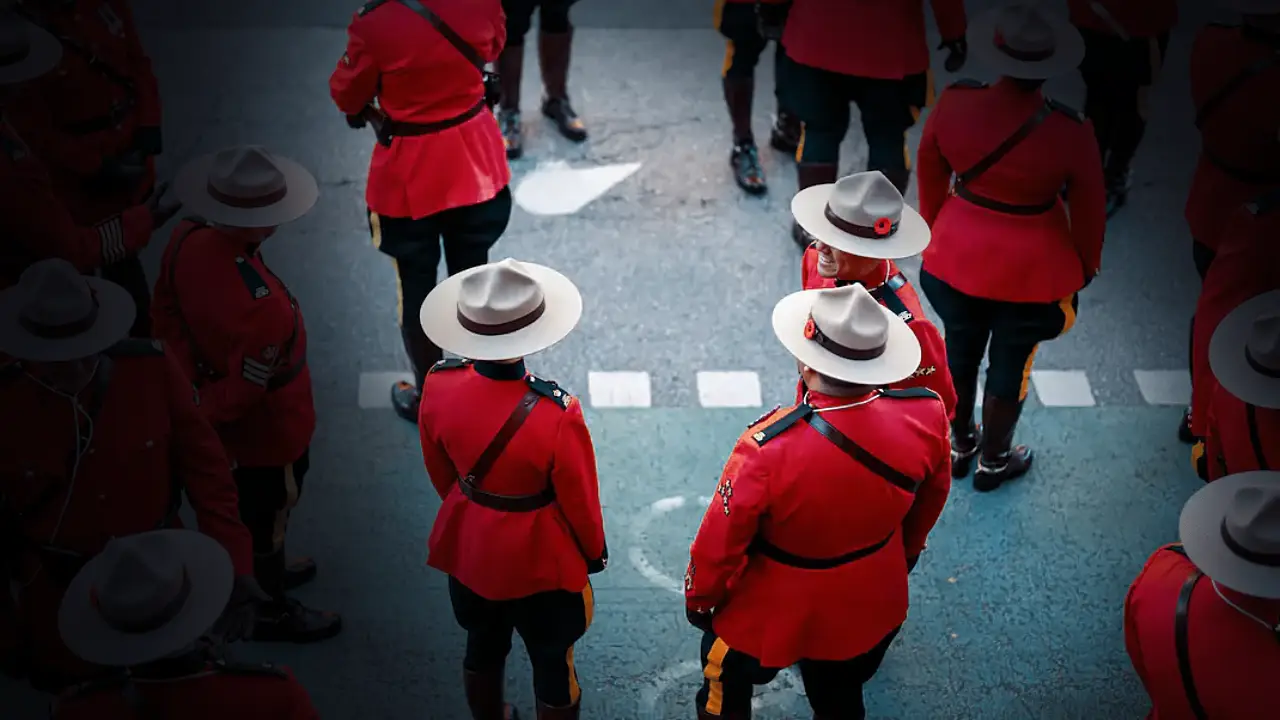
The most damning evidence lies within the hollowing out of the RCMP. Karen Hogan’s report on recruitment is not merely a list of missed targets; it is a description of a national security apparatus in a state of managed decline. Despite the Carney government’s claims that they were professionalizing the force through more rigorous screening and streamlined training, the data shows a recruitment pipeline that is effectively blocked by its own complexity. We are looking at a massive lag in processing that has left regional detachments at roughly seventy percent capacity. This is a figure that would be considered a national crisis in any other developed nation but is treated here as a statistical rounding error to be managed in the next fiscal quarter.
This is where the "taking back control" narrative meets the hard floor of reality. You cannot have public safety if you do not have the boots to maintain it. The report highlights that while the PMO was busy redesigning the recruitment portal to better align with modern ESG standards and progressive identity metrics, they allowed the actual training infrastructure to atrophy. We have vacancies in critical areas of organized crime and border enforcement that have remained unfilled for over eighteen months. In the vacuum left by the RCMP’s absence, the very elements this government promised to suppress are thriving. It is a betrayal of the fiduciary duty the state owes to its citizens, particularly those in rural and northern communities who see the thin blue line fading into a ghost of its former self.
A 97 Percent Failure Rate
The failure is not limited to the domestic front. Karen Hogan’s autopsy of the international student reforms and the broader temporary resident targets is perhaps even more egregious because it strikes at the heart of our national sovereignty. We were told that the Carney Doctrine would bring rationality to the immigration system. We were promised a hard 5% cap on temporary residents to stabilize the housing market and ensure that the social contract remained intact. Yet, the report released today confirms that under the watch of Immigration Minister Lena Metlege Diab, the 5% target is a fantasy. It is an aspirational figure that the bureaucracy has no intention, or perhaps no ability, to hit.
The specific data points provided by the Auditor General are staggering. Between 2023 and 2024, post-secondary institutions flagged approximately 153,324 cases of potential non-compliance among international students. These were individuals who were not attending classes or were otherwise violating the terms of their stay. Out of those 153,324 flags, Minister Diab’s department managed to launch only 4,057 investigations. That is a failure rate of over ninety-seven percent. When the government ignores nearly every red flag raised by the system, the system itself ceases to exist. It becomes a mere suggestion, a bureaucratic theater that serves no purpose other than to collect fees and populate a database that no one bothers to read.
Furthermore, Hogan’s audit revealed that even when the system identifies blatant fraud, the department remains paralyzed. There were 800 cases of applicants using demonstrably bogus documents or misrepresented information between 2018 and 2023 that were simply never followed up on. Even more concerning is the fate of those whose visas have already expired. The Auditor General worked with the Canada Border Services Agency to confirm that of the 150,000-plus individuals whose student visas expired in 2024, only about 16,000 actually left the country. The rest remain in a legal limbo, a shadow population that the Carney government refuses to acknowledge as they continue to preach about the integrity of our borders.
Minister Lena Metlege Diab stood before the committee today and claimed that these findings only capture the first eighteen months of a multi-year reform effort. She asked for patience while the "Carney Doctrine" iterates. But justice and sovereignty do not iterate; they either exist or they do not. When a minister admits that the department simply doesn't act on the data it already has, she is admitting to a fundamental breakdown in the rule of law. We have created a two-tiered society where the official immigration portals are clogged with red tape for the law-abiding, while a shadow system of overstays and fraudulent applications operates with virtual impunity.
This brings us to the core of the Carney Doctrine’s failure. It is a philosophy that believes human systems can be managed like a portfolio of assets. There is a profound disconnect between the men and women sitting in the PMO, staring at their optimized models, and the reality of a border that is effectively open to whoever has the patience to outlast the paperwork. When you replace the rule of law with the rule of the spreadsheet, you lose the moral authority to lead. The Auditor General’s report shows that the government has failed to hit even its own lowered expectations, leaving the country vulnerable to the very populist critiques they so desperately want to avoid.
Policing Prayers Over Policing Borders
The spiritual dimension of this failure becomes even clearer when we look at the legislative agenda currently moving through the House. While the government fails to secure the borders or staff the police, they are moving with alarming speed on Bill C-9, the Combatting Hate Act. This legislation, currently at the Report Stage, is being marketed as a tool for public safety, but its actual contents reveal a different priority. A key amendment in the bill seeks to repeal the long-standing religious defense in the Criminal Code. This protection allowed for the good-faith expression of religious beliefs and the citing of sacred texts. By removing it, the Carney government is signaling that they are more interested in policing the thoughts and words of the faithful than they are in policing the criminals who exploit our broken immigration system.
The removal of the religious defense is a direct assault on the freedom of conscience. It suggests that a person reading from the Bible, the Torah, or the Quran could potentially face criminal prosecution if their words are deemed "hateful" by a government-appointed arbiter. This matters because it highlights the misplaced priorities of the technocratic elite. They cannot manage to investigate 150,000 flagged student visas, but they are eager to create the legal framework to investigate what is being said from the pulpit. It is a classic move of a regime that has lost its grip on physical reality and is instead trying to assert control over the moral and spiritual landscape of its citizens.
The Reality of the Managed Surrender
The populist movement in this country has long argued that the elite have abandoned the concept of a bordered, secure nation in favor of a globalized administrative zone. Looking at Karen Hogan’s findings today, it is impossible to argue that they are wrong. When the RCMP cannot recruit enough officers to staff a small-town station because the "diversity and efficiency" metrics are being prioritized over basic competence and speed, that is not progress. When Minister Diab announces a cap on temporary residents but fails to implement a single mechanism to ensure those individuals actually leave when their time is up, that is not taking back control. It is a managed surrender.
We must look closely at Bill C-9. The Carney government has positioned this legislation as the final piece of the puzzle for accountable governance. But if the existing structures are this broken, what is another layer of bureaucratic oversight or speech policing going to achieve? The Auditor General’s report suggests that we don't need more oversight committees or more hate-speech categories; we need a return to the foundational principles of statecraft. We need a government that understands that public safety and border integrity are not outcomes to be measured in a quarterly report, but the primary reasons for the state’s existence.
A government that lies to its people through the medium of statistics is a government that has lost its way. When the Prime Minister stands in the House and claims that the 5% target is being met, while his own Auditor General points to a massive, unaddressed backlog that makes that target impossible, he is not just being aspirational. He is being deceptive. This deception erodes the trust that is necessary for a functioning democracy. It tells the average Canadian that their concerns about community safety and national cohesion are secondary to the government’s desire to maintain a pristine digital image.
The Carney Doctrine was supposed to be the antidote to the chaos of the previous administration. It was sold as a return to the adults in the room, the experts who knew how to pull the levers of power with surgical precision. But what we see today is a room full of experts who are pulling levers that aren't connected to anything. They are operating a simulation of a government. The RCMP recruitment crisis is real. The failure to manage the temporary resident population is real. The rise in crime and the strain on our social services are real. The only thing that isn't real, according to Karen Hogan, is the government’s claim that they have a handle on any of it.
If we are to take back control, as the Prime Minister so frequently likes to say, we must start by acknowledging that the current path is a dead end. We cannot manage our way out of a crisis of sovereignty. It requires a firm hand, a clear moral vision, and a willingness to prioritize the safety and security of the Canadian citizen over the approval of international bodies or the neatness of an Excel file. The massive lag described in today's report is a symptom of a deeper paralysis. It is the paralysis of a government that is afraid to act with the decisiveness that a sovereign nation requires.
The Auditor General's reports should be a wake-up call, but in the halls of the PMO, they will likely be treated as data points to be massaged into the next communications strategy. They will talk about iterative improvements and digital transformation initiatives. They will promise that by the next fiscal year, the targets will be within reach. But the people of this country can see through the jargon. They see the empty patrol cars. They see the overcrowded housing and the strained infrastructure. They know that a country that cannot control its borders or its own police force is a country in name only.
We are at a crossroads in 2026. We can continue down the path of technocratic decline, where the state becomes more complex as it becomes less effective, or we can demand a return to the basics of national integrity. Justice is not found in a well-formatted report; it is found in the safe streets and the secure borders of a nation that respects itself. The Carney government has spent its first chapter building a paper fortress. It is time for them to realize that the wind is blowing, and the pages are starting to fly away. The moral weight of this failure lies with those who promised a new era of efficiency but delivered only a new era of obfuscation. The truth is that the Carney Doctrine is currently an exercise in vanity, a way for the elite to feel in control while the actual mechanisms of the state fall into disrepair. We do not need more efficiency. We need more honesty.