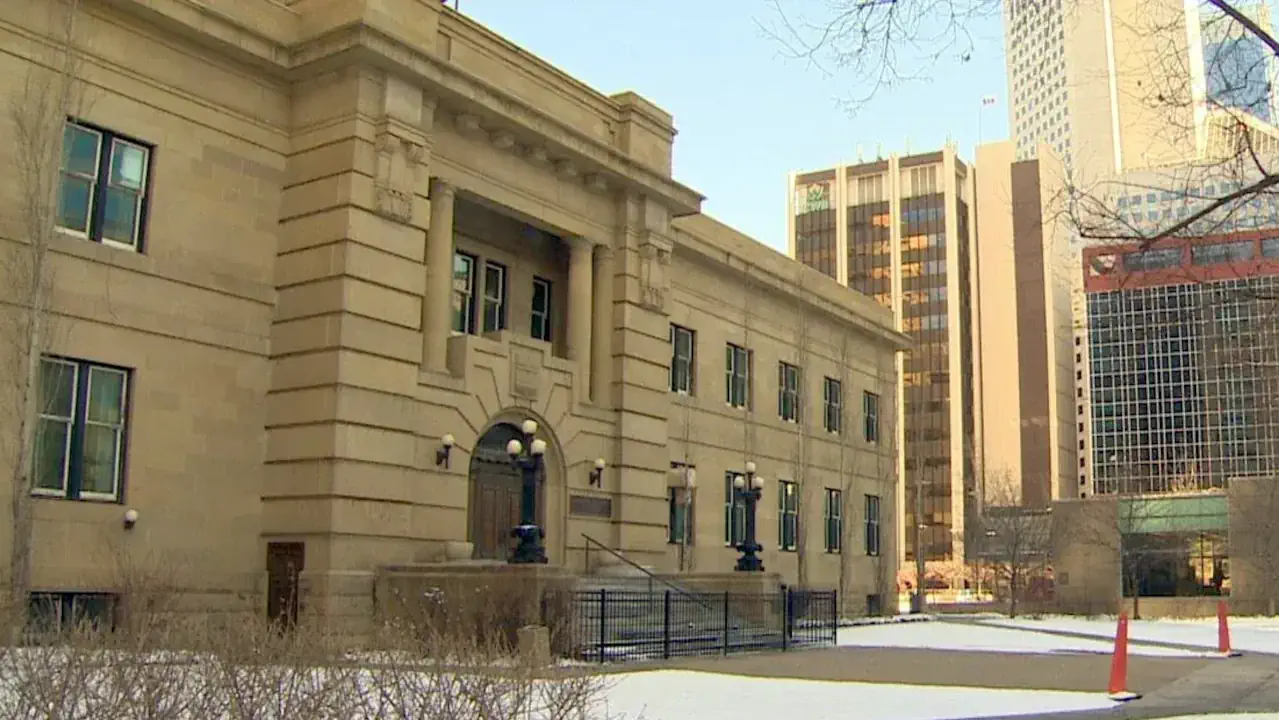
The air in the Alberta Court of Appeal this week doesn't smell like the cold, crisp promise of a northern sunrise. It smells like the stale, expensive mahogany of a boardroom in Manhattan or a high-rise in London. It smells like the mendacity of a federal government that has decided, in its infinite and unearned wisdom, that Alberta is no longer a partner in Confederation, but a distressed asset to be managed, downsized, and eventually liquidated to satisfy a global ESG scorecard. We are watching a sequel that every Canadian outside the Laurentian bubble knew was coming—a legal shell game where the stakes aren't just words in a statute, but the very solvency of our nation.
Mark Carney, our Goldman Prime Minister, stands before the nation with the practiced poise of a man who has spent his life telling people how to manage risk he didn’t create. He speaks of "certainty" with the clinical detachment of an actuary, yet every move he makes is designed to sow the exact opposite. He smiles for the cameras in Calgary, pointing to the "Energy Accord" he signed with Premier Danielle Smith as if it were a holy relic that ended the decade of discord. But while he’s playing the role of the statesman—leveraging geopolitical chaos as a human shield—his legal team is back in the courtroom, armed with a thesaurus and a mandate to commit constitutional vandalism. They aren't trying to follow the 2023 Supreme Court ruling that declared their original Impact Assessment Act (IAA) unconstitutional; they are trying to bypass it through linguistic trickery.
The Liquidation of Confederation
The "Thesaurus Defense" is the latest weapon in this jurisdictional war. By swapping the blunt "veto" for the surgically vague "non-negligible adverse effects," the Carney government has created a legal vacuum. This isn't just a semantic debate; it is a financial chokehold. When we look at the fourteen major Tier-1 infrastructure projects currently stalled across this country, the math is staggering. By calculating the total sidelined investment of these specific ventures, we find a $60.4 billion "Regulatory Escrow." This is capital that is effectively being held hostage because no investor can calculate a predictable return when the federal government holds a perpetual, undefined option to kill a project based on a synonym.
The fundamental grievance here isn’t about environmental protection; it is about power. It is about an elite class in Ottawa that views the natural resources of the West as a "problem" to be managed. The Carney government didn't listen to the Supreme Court’s warning about overstepping provincial rights. Instead, they performed "cosmetic tinkerings" to ensure no major project moves forward without the blessing of a cabinet that treats the Prairies like a colony. They are transferring the jurisdictional authority of the province to a central committee in Ottawa, effectively asset-stripping the Constitution.
The $60 Billion Regulatory Escrow
The mechanism of this betrayal is visible in the hard reality of project outcomes. If you track the success rate of major industrial applications today against the regulatory era of twenty years ago, the trend is a death spiral. By measuring the "velocity" of projects through the current system, we see a 220% increase in project fatality risk. This isn't a guess; it is the result of comparing how many projects are proposed versus how many are abandoned due to the sheer cost of regulatory carry. It is a 37% rise in the total regulatory burden, acting as a ghost tax on every Canadian worker.
This courtroom showdown is a masterclass in institutional gaslighting. The federal government is moving the "federal interest" around so fast that by the time a province realizes it’s been robbed, the capital has already fled to Texas or Australia. As recorded in the Alberta 2025-26 Second Quarter Fiscal Update, the province is already forced to account for a $2.4 billion "Legal Uncertainty Discount." This figure represents the actual money stripped from provincial projections because proponents are pushing their start dates into the indefinite future. This is the "Goldman Method": everything is discounted for risk, and under Mark Carney, the biggest risk to Canada is Canada itself.
Sabotage in an Era of Protectionism
The irony is as thick as the bitumen they want to keep in the ground. In an era of global trade friction, Canada needs internal strength. We need infrastructure to move products to the coasts and decouple from Washington’s whims. Yet, the Carney government is building the most effective trade barrier in history right here at home.
The red tape forged in the Department of Justice is a gift to the Americans. By calculating the difference between our current pipeline throughput and our potential capacity if projects weren't mired in court, the loss is clear: 140,000 barrels per day in potential export capacity—a $4.1 billion annual revenue loss. While Carney talks about "Team Canada" in the face of U.S. aggression, he is kneecapping the team members who provide the country’s economic muscle. He isn't a politician seeking consensus; he is an orchestrator seeking total regulatory control while the public is distracted by the trade war headlines.
The Tactical Deception
The "Energy Accord" was not a peace treaty; it was a tactical deception. It was a move designed to buy silence while the legal gallows were being constructed. It promised a maximum two-year approval timeframe—a promise revealed as hollow fiction by the very amendments being debated in court. This challenge proves the "Carney-Smith Peace" was a political mask. Carney doesn't need Alberta's cooperation; he needs the appearance of it to keep markets calm while he manages the decline of our resource sovereignty.
The payoff for the taxpayer is a bill that keeps growing. We face a $55.6 billion bill for public debt charges, blowing past the $49.1 billion structural safety floor. We are $6.5 billion in the red just to pay interest on debt. By suppressing the growth of our most productive industries, the government is essentially running a jurisdictional Ponzi scheme: promising "Accords" to maintain a facade of stability while ensuring the revenue-generating projects required to pay the debt can never actually break ground.
If the Alberta Court of Appeal finds these amendments are indeed "cosmetic," it will be a devastating blow to the Carney government’s credibility. They thought they could outsmart the Constitution with a better vocabulary. They were wrong. The "No More Pipelines" boomerang is coming back, and it’s heading straight for the Prime Minister’s Office. You cannot lead a nation by treating its most productive citizens like a problem to be managed. Ottawa still wants the veto. And as long as they do, there will be no peace, no certainty, and no future for a unified Canada.