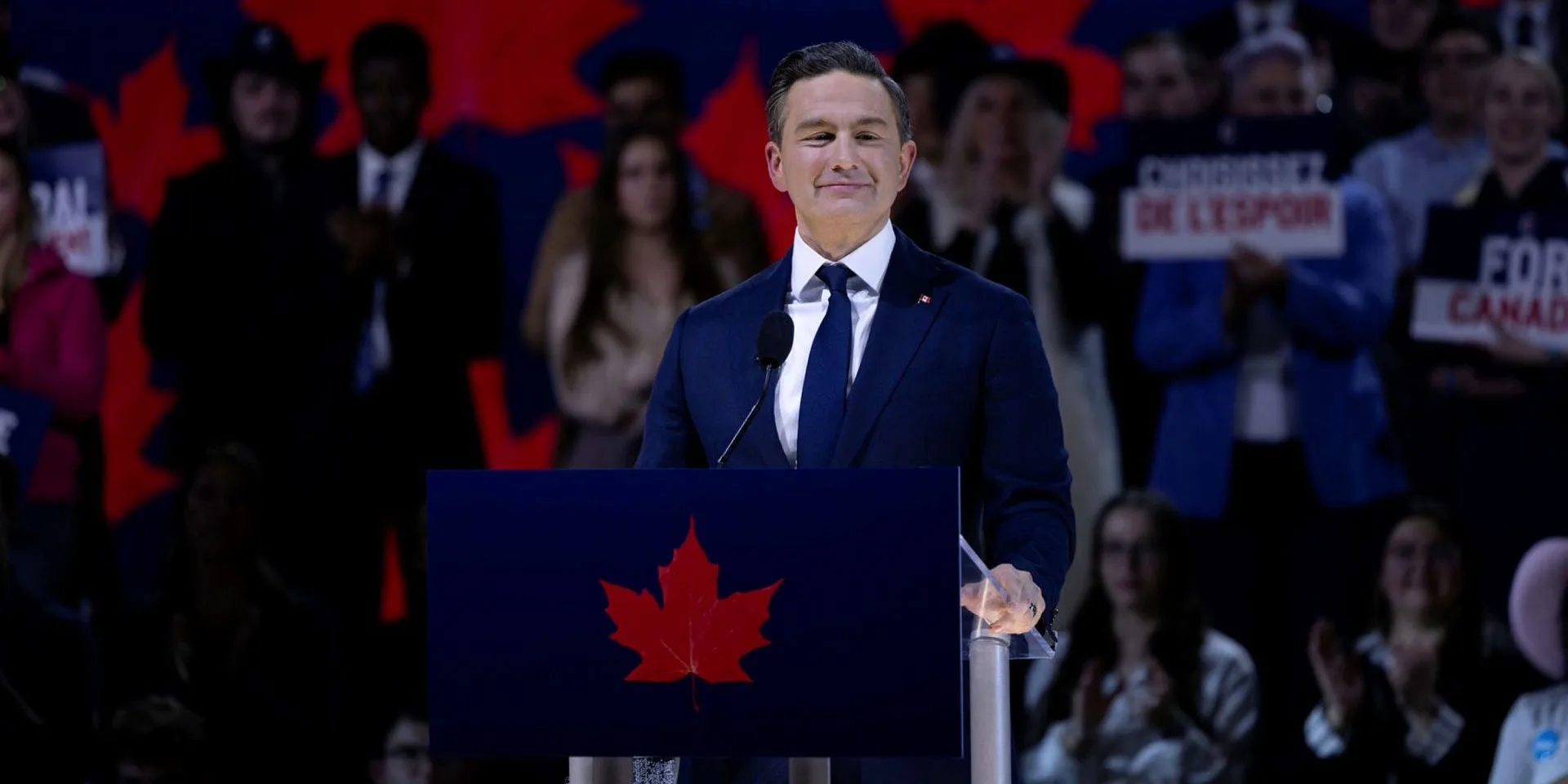
The results from the Calgary BMO Centre are in, and the verdict is as surgical as it is absolute. Pierre Poilievre has secured a leadership endorsement of 87.4 per cent, eclipsing the 84.1 per cent mark set by Stephen Harper in 2005. For a leader who saw a 20-point polling lead evaporate during the April 2025 general election—losing his own seat in Carleton to the Liberals—this is not merely a "vote of confidence." It is a structural refortification.
While the Ottawa press gallery remains fixated on Poilievre’s "low general favorability" and the technocratic rise of Prime Minister Mark Carney, they are missing the logistical reality. The Calgary mandate signals that the Conservative movement has moved past the shock of the 2025 defeat and is currently re-tooling for a war of attrition. Poilievre isn't just surviving; he is consolidating a base that is wealthier, more aggressive, and more unified than at any point in the party's history.
Grassroots Restoration and the End of the Parachute
One of the most significant pivots in Poilievre’s address was the frank admission regarding nomination interference. For years, the Conservative grassroots have bristled under a centralized approach where the leader’s office dictated local candidates. Poilievre’s loss in his own riding, followed by his transition to the safe Alberta seat of Battle River-Crowfoot, underscored a disconnect between the party’s executive and its local engines.
His pledge in Calgary to return power to riding associations is a tactical necessity. By promising to end the practice of "parachuting" preferred candidates and curbing interference from the National Council, Poilievre is essentially offering a peace treaty to the very people who do the door-knocking. In a parliament governed by Mark Carney’s Liberals, the ability to mobilize ground teams in must-win ridings is the only currency that matters. This isn't populist window-dressing; it is an admission that the centralized model failed in 2025 and a decentralized, grassroots-led campaign is the only path back to power.
The Cultural Pivot: Castle Laws and Warrior Culture
The policy shifts adopted in Calgary reflect a party that has stopped trying to apologize for itself. The overwhelming 91 per cent support for a "Castle Law" self-defense amendment represents a fundamental break from Canadian legal orthodoxy. By proposing that the use of force be presumed "reasonable" against home intruders, Poilievre is directly challenging the Liberal narrative on public safety. While Prime Minister Carney focuses on international trade stability and global lithium supply chains, Poilievre is positioning himself as the man worried about your front door.
This pivot extends into the Canadian Armed Forces (CAF). Poilievre’s commitment to purging "political correctness" in favor of a "warrior culture" and merit-based recruitment is a direct assault on the DEI frameworks of the Liberal era. This isn't just about spending—though Poilievre has committed to the 2 per cent NATO target—it is about the institutional identity of the military. By focusing on Arctic sovereignty, permanent bases in Churchill and Iqaluit, and doubling the planned fleet of polar icebreakers to four, the party is positioning itself as the sole defender of national territory.
The $48 Million War Chest
Perhaps the most daunting metric for the Carney Liberals is the Conservative Party’s financial operational strength. In 2025, the party raised a record-breaking $47.78 million from over 327,000 individual donations. This is not a leadership score; it is a hostile takeover of the status quo. To put the "Goliath gap" in perspective, the Conservatives raised $28.1 million in Q1 2025 alone—nearly matching the Liberals' entire yearly total of $29 million.
This financial disparity is the "receipt" that validates the 87.4 per cent leadership review result. You do not raise nearly $50 million in a year where you lose an election unless the donor class is convinced the leader is still the viable vehicle for their interests. While Carney enjoys "post-Davos bumps" in favorable media coverage, Poilievre is seeing "bank-account bumps" from a mass-market political subscription service. This war chest allows the Conservatives to run a permanent campaign that doesn't need the Ottawa Press Gallery to function.
The Carney Contrast
The media narrative currently depicts Prime Minister Mark Carney as the "adult in the room"—the PhD-holding technocrat who stabilized the Liberal Party after Justin Trudeau’s resignation. Carney attempted to steal the Conservatives' playbook by cynically removing the consumer carbon tax himself, hoping to neutralize the "Axe the Tax" momentum before it could sink his young administration.
However, Calgary proves that the Conservative Party is not interested in "Carney-lite" governance. The 87.4 per cent endorsement is a mandate for a sharper, more aggressive contrast. While Carney manages the decline of the Canadian middle class through technocratic adjustments and "shadow carbon prices" on industry, Poilievre is building a movement based on property rights, military merit, and grassroots autonomy. One man wants to manage the world; the other wants to defend your living room. The Calgary convention was not a funeral for Poilievre’s career; it was the assembly of a much more dangerous, much better-funded opposition.